Friday, May 1, 2009

RIPPO the Fool—5 Types of Fool Think

After looking over my list of 60 "How to Think Like a Fool" concepts, I found they awkwardly fit into 5 categories, with many being able to crossover the boundaries—just like a good fool does.

Risk
Imagine
Play
Pretend
Observe

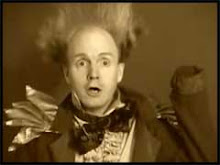
They're pretty self-explanatory. That's a picture of RIPPO below:


NEXT How to Think Like a Fool #1: Look for Trouble


How to Think Like a Fool in 60 DWays


For the next 60 days, I'm going to post a concept a day on how to think like a fool for creative problem solvers (who have a playful sense of humor). Last year I posted a rough list of 30 Ways to Think Foolishly based on over 25 years of research studying, performing, and teaching the art of foolery. Since then I've refined, edited, and added to the list, which has grown to 60 concepts that fit under 5 categories. My sources include Buster Keaton, Charlie Chaplin, Laurel and Hardy, The Marx Brothers, Bugs Bunny, Wile E. Coyote, Sufi teaching stories, new and old Vaudevillians, theatre and circus clowns, writers and visual artists, inventors, eccentrics, my own performance work, and my own foolish life.

"The fool doth think he is wise, but the wise man knows himself to be a fool."—Shakespeare

Let me know if you find any of this useful, and if you do, tell a friend.
You can follow me on twitter @drewfool

NEXT RIPPO the Fool: 5 Types of Fool Think


Wednesday, March 11, 2009

Sinatra's Theory of Acting

"Acting is Doing."
"Acting is Being"
"Do Be Do Be Do"—Frank Sinatra

Thanks to Kurt Vonnegut for introducing me to a variation of this joke.


Tuesday, March 10, 2009

Hugh Macleod's Crazy, Deranged Fools

Cartoonist Hugh Macleod recently coined the term Crazy, Deranged Fools. In his words,

A CrazyDerangedFool [CDF for short] is, like me, somebody who has the temerity to aspire to work in a way that produces both joy, meaning and contribution for both them and others, while also paying the bills. It's about creativity, it's about finding meaning, but it's also about living in the real world.

A. Most people work for the money. Most people wouldn’t do their jobs for free.
B. Most people hate their jobs.
But I’m not thinking about “Most People” right now. I’m thinking about the small percentage of the population who want to love their work; who want to find meaning in their work... and are willing to work like hell to find out how. Those crazy, deranged fools… How do they manage to exist? How dare they exist!

link: gaping void: dear crazy, deranged fools...

Hugh Macleod's blog offers many foolish thoughts (in the good way), whether from his contrarian marketing strategies, his "cartoons drawn on the back of business cards", or his advice on creativity.

You can read some of that advice on how to be creative here: Ignore Everybody (the book comes out in June).

And here's my favorite cartoon:

If you like what you see and read, sign up for his newsletter.


Saturday, March 7, 2009

George Carl and the Inner Monologue Exercise

Here's one of my favorite fools, George Carl:

Foolish Exercise
The exercise here is to look at the first two minutes or so of this routine and to write or improvise a monologue for what this character might be thinking, often called an interior monologue.

I'm not saying this is something that George Carl did, but I have found for myself that an interior monologue can help with intentions, fine-tuning, presence, and timing. It can also help to bring back to life a routine that has become rote from too many repetitions.

Some may think that this is too intellectual a tool for a physical routine, but I find that it's really a trick to occupy the verbal/intellectual part of the mind so that the playful part can get past the critical guard.

Some guidelines: The monologue can be like you are narrating to yourself what you are doing and what is happening to you. Keep it simple and short—inner monologues aren't usually great poetry, deep thoughts, or even complete sentences:
Oh!
Wait a second...
How' d that...
Stuck again.
I know...
I'll move this and—
Ouch!
Walking, walking,
Falling!

Another way to practice this fool tool is to narrate five minutes of your life while engaged in some non-verbal task. As a side benefit, you'll also be practicing a form of mindfulness.


Saturday, February 28, 2009

How To Steal Material Without Getting Caught

I wrote this article/online workshop on creating visual comedy in late 2001 and early 2002. After many years floating homeless on the internet, it has just been republished at performers.net.

Originally intended for variety entertainers, the same principles can be used for any creative endeavor. Let me know if and how you use them.