Friday, December 11, 2009

Foolish Me

Am I clumsy because I'm a fool, or a fool because I'm clumsy?

Or am I just human?

An example of my own real life foolery, or where I get material:

I tried to pull out a cork from a bottle of wine I had opened the night before. As I pulled, I could feel the cork breaking, so I slowed down and got very careful and methodical. The cork broke anyway, leaving about a quarter still stuck in the neck of the bottle.

I contemplated pushing the rest of the cork in the bottle. But I hate doing that! So I decided to remove it using the corkscrew. The cork was pretty damaged, but I was able to secure it, and I pulled—too hard.

The cork came out, as did the wine in a fountain as if I had put a Mentos in a bottle of Diet Coke. Red red wine, all over the floor, all over the counter, all over me.

Ta Da!


Tuesday, December 8, 2009

How to Think Like a Fool Movie #2


Here is the second "How to Think Like a Fool" moving picture, Make Things More Difficult (click the link to go to YouTube and see it bigger or in high-def).

I shot this one night last week very quickly. In general, I want to make these movies simply and easily, but that's not in the spirit of this specific fool tool, so I made things more difficult by reworking and reshooting two nights later.

Sometimes I find that the first take is the best and most spontaneous, but this time I preferred the final take. I'm glad I followed my own advice.

Only 58 more to go (difficult) (foolish).


Saturday, December 5, 2009

How to Think Like a Fool Demo Movie #1


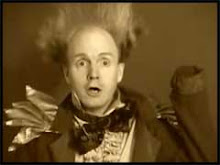
I've started to make short silent movies demoing each of the "How to Think Like a Fool in 60 Ways" concepts with the help of a fool I know.

Here is the first, Look for Trouble (the bigger you watch it, the better).

I shot the footage last spring, but didn't edit, add the titles, and frame with curtains until this fall.

The movie started as an exercise to find as many problems as I could with the props I had chosen. Only some of the troubles made the final cut. I picked props like the chair and table for their inherent problem potential.

In other words, I looked for trouble.


Sunday, October 25, 2009

How to Think Like a Fool in 60 Ways


Here's the complete list of blog posts with links:

How to Think Like a Fool: RIPPO the Fool—5 Types of Fool Think
RISK
#1: Look for Trouble
#2: Make Things More Difficult
#3: Don't Solve the Problem
#4: Set Yourself Up for Failure
#5: Try a Really Bad Idea
#6: Scare Yourself
#7: Make a Fool Out of Yourself
#8: Seek Rejection
#9: Trust in Dumb Luck
#10: Use Weaknesses as Strengths
#11: Fix What Ain't Broken
#12: Never Give Up
#13: Give Up
#14: Repeat Repeat Repeat
#15: Play It Safe
IMAGINE
#16: Imagine the Impossibilities
#17: Connect the Unrelated
#18: Transform Objects
#19: Borrow Ideas
#20: Exaggerate the Details
#21: Fantasize the Future
#22: Picture an Audience
#23: Misremember the Past
#24: Worry about Everything
#25: Destroy
PLAY
#26: Make Fun
#27: Do the Opposite
#28: Manipulate Time and Space
#29: Act without Reason
#30: Make and Break the Rules
#31: Compete with Yourself
#33: Use More Effort Than Necessary
#34: Use What's Handy
#35: Secretly Cooperate
#36: Fool Around
#37: Make Music
#38: Be Serious
PRETEND
#39: Change Identity
#40: Do the Wrong Thing
#41: Act Crazily
#42: Fool Others
#43: Fool Yourself
#44: Get Caught Up in the Moment
#45: Overreact
#46: Go Through the Motions
#47: Know Everything
#48: Enjoy Failure
#49: Play Yourself
OBSERVE
#50: Spy on the World
#51: Misunderstand
#52: Look for Laughs
#53: Change Your Perspective
#54: Pay Attention to the Unnoticed
#55: Follow and Trip Assumptions
#56: Listen to your Unconscious
#57: Ride the Opportunities
#58: Find the Best in the Worst
#59: Don't Think
#60: Think Like You


Sunday, August 30, 2009

How to Think Like a Fool #60: Think Like You

OBSERVE: Think Like You
"If every fool wore a crown, we would all be kings."
—Welsh proverb

There are as many kinds of fools as there are people on this planet (just some of us are lucky enough to get paid for it). The last method to think like a fool that I'm proposing, but one that will generate many more, is to observe how you think foolishly, and then to do it on purpose instead of accidentally. You have your personal ways of playing the fool, some that may be close to the ones I've listed, and some that are distinctly your own.

You may be a fool for love, rush in where angels fear to tread, or you and your money are soon and often parted. The trick, as I've been doing for each entry in this series—and fools have done forever—is to see the best in the worst and turn your weaknesses into strengths. Figure out how your foolishness can help you solve problems creatively or at least to generate problems that challenge you in a worthwhile way.

This video has nothing to do with the topic today (or does it?), but I love it anyway (yup, fool for love of art and life). So I'll end with this, an Ode to Joy:

Think: How am I foolish? When am I foolish? Where? Why? How can this way of thinking help me solve this problem?

Previous "How to Think Like a Fool" Posts

FOOL's NOTE: Thanks for reading my musings these past few months. This blog will continue soon with more examples, observations, and ideas. I'll also make better links of the entries and create a master page where you can access them all in one place. I may even turn this series into an ebook if people are interested. Please leave comments or email me personally. I would love to hear what you think. And tell your friends and colleagues. Stay Foolish!—Drew


Saturday, August 29, 2009

How to Think Like a Fool #59: Don't Think

OBSERVE: Don't Think
"Often the hands will solve a mystery that the intellect has struggled with in vain."
—Carl Jung
"Did you ever stop to think, and forget to start again?"
—Winnie the Pooh
"Sometimes I think, and sometimes I am."
—Paul ValĂ©ry

My 3 1/2 year old neighbor Milo, sees me out on the porch quite often. He asked his mom, Francine, "Why isn't Drew silly all the time?"
Francine: Because sometimes he's thinking about how to be silly.
Milo: I don't have to think about being silly. I can do it anytime! Look—lao blao lao blao lao blao lao blao lao blao lao blao lao blao lao [accompanied by silly faces and movements].

If you've been following and practicing this series on how to think like a fool, you now have a lot of fool tools in your arsenal. Forget them all. Now is the time to trust, quiet or distract your chattering mind, and simply act like a fool. Be a fool.

You've always known how.


Think:

Next: How to Think Like a Fool #60 Think Like You

Previous "How to Think Like a Fool" Posts


Friday, August 28, 2009

How to Think Like a Fool #58: Find the Best in the Worst

OBSERVE: Find the Best in the Worst
"Optimism - the doctrine or belief that everything is beautiful, including what is ugly."
—Ambrose Bierce
"Comedy is acting out optimism."
—Robin Williams
"Between the optimist and the pessimist, the difference is droll. The optimist sees the doughnut; the pessimist sees the hole."
—Oscar Wilde
"Donuts. Is there anything they can't do?"
—Homer Simpson

In today's world (and yesterday's and tomorrow's), things can be so horrible and depressing, that it seems foolish (ding!) to be an optimist. Yet optimists live longer, are more successful, and happier than pessimists. They also get more done, because they aren't stuck wallowing in despair.

Pessimists may see the world more realistically, but fools think realism's overrated (and just as selective as optimism). Fools don't just look for the pony in the proverbial pile of poop, they wrap the manure and sell it as extra dark chocolate. And make a bundle of money.

Fools make Pollyanna look like Eeyore.

The personification of the oblivious optimist is Harry Langdon. He's usually just too innocent to see anything else.

There's a moment in my piece "The Juggler," in which I keep trying to juggle, keep dropping, ignore each drop, and simply get a new ball from my case. (Step one: Ignore the worst. Move on.) And then, with a flash of insight, I change the game. I'm not trying to juggle, I'm trying to drop! (Step two: Transform the bad into something glorious.) I proudly throw three balls on the ground and bask in the applause.

You practice seeing the best in the worst as a temporary trick on your mind, a tool you can use to move ahead and make luck happen.

But occasionally, to flip this fool tool, fools look for the worst in the best. Seeing the worst may be the critical eye you need to break the spell of an idea that's only good enough.

Think: Is the glass half empty or half fool? What's the best that I can see here? What's the worst?

Next: How to Think Like a Fool #59: Don't Think

Previous "How to Think Like a Fool" Posts